
Rethink how you frame your humanities PhD for employers
Leaving academia is a job-search problem and a translation challenge, especially when you’re trying to advocate for your candidacy as a humanities PhD exploring alt-ac roles.
In this live, 2-hour Zoom workshop ($97), we turn the parts most job searching PhDs hate—understanding corporate language, deciding what belongs on a résumé, and learning how to position academic experience for non-academic readers—into practical tools for your job search.
Built from work with hundreds of humanities PhDs navigating non-academic career transitions, and recognized by partners like the University of California Humanities Research Institute and the Modern Language Association, this workshop helps humanities PhDs rethink how they understand, position, and talk about their experience with potential employers.
Choose the session that works best for you.
You’ll be taken to our secure Luma checkout to complete registration.
NOTE: Each date covers the same material; attend once and bring your questions.
What we’ll cover
Converting an academic CV into a focused, non-academic résumé.
Turning teaching, research, and service into quantifiable, non-academic accomplishments.
Making your résumé machine-readable for ATS systems.
Updating LinkedIn so it speaks to non-academic employers.
Writing cover letters that connect your background to specific roles.
Using Job Description Analysis (JDA) to see what employers really want and respond accordingly.
Post-attendance materials
A customizable résumé template designed for non‑academic roles, along with anonymized examples that yielded interviews.
A cover letter template, as well as example cover letters that have converted to interviews.
A Job Description Analysis (JDA) worksheet you can use on your own.
Matching references and salary history templates (for use where allowed).
A job‑submission tracking worksheet to keep your search organized.
A published overview of the JDA method to support your own analysis.
Why we created this training
This program grew out of a collaboration between Jared Redick and Ryan Fowler, PhD. When Ryan first approached Jared after fifteen years as a professor, he was exploring an academic career transition into publishing but was unsure how to position himself beyond academia.
A former retained executive search recruiter for firms in New York and San Francisco, Jared had long known that the résumé-writing process could be a powerful tool for career exploration and decision-making, not just a bureaucratic part of the job application process. He'd brought his structured methodology to his work with the UC Humanities Research Institute (UCHRI), where he supported humanities PhDs in translating their experience for roles in technology, consulting, government, and nonprofits. Ryan now brings the credibility and perspective of someone who has very recently made the leap by testing ideas in the market, and ultimately landing his ideal alt-ac role.
Humanities PhDs are highly capable of doing the analytical work of a career transition, but often have limited time, energy, or resources to apply those skills to themselves. As the years pass, the question of “what else is possible?” gets a bit louder, and the gap between academic and industry narratives grows.
And when it comes to structured support, organizations exist for STEM PhDs, yet there’s a meaningful gap in the preparedness of humanities PhDs. Indeed, few services are tailored to the realities, training, narratives, and capabilities of humanities scholars.
Jared and Ryan created this training to address that gap.
Where this approach has led
Since 2013, Jared has worked with humanities PhDs and ABDs who have successfully transitioned into roles across multiple industries. The résumé development and career exploration frameworks taught in this workshop are grounded in more than a decade of one-on-one client work, group workshops, and ongoing refinement based on what actually works in the market.
Humanities PhDs attendees and clients have gone on to roles such as:
Strategy & Transformation Consulting: Humanities PhDs who now work in MBB management consulting firms, advising senior leaders on strategy, organizational change, and complex problem-solving.
Technology & Ethics: A humanities-trained ethicist who leads ethics work for a major technology company, partnering directly with C-suite product leadership on responsible innovation and governance.
Education & Edtech: Product managers, content strategists, and learning experience designers at education and edtech companies.
Nonprofit & Public Sector Leadership: Executive directors, program directors, and policy-focused roles in nonprofits and government.
Publishing & Media: Editorial and content development roles in academic and trade publishing.
Not every participant will pursue or want roles at this level. But these outcomes demonstrate that with the right positioning, training in the humanities can translate directly into competitive candidacy for senior, strategic, and intellectually rigorous roles across sectors—as long as applicants can explain how their skills and talents are relevant. This is not about becoming someone else, but instead about learning how to communicate about academic accomplishments and orientations.
“The question of how to arrange items on my résumé has paralyzed me for a long time, preventing me from doing very much on the job search front. Now I feel like a huge burden has been lifted from my shoulders. Because of your suggestions, I feel much more confident about presenting myself to potential employers and I think I can finally move forward.”
→ Read more from past workshop participants
Meet the presenters
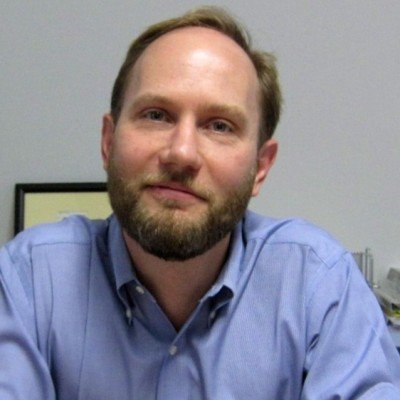
Jared Redick
Jared is an executive coach, career transition expert, and executive résumé writer with extensive experience helping professionals reposition themselves for new roles and industries. His early career in retained executive search and NEH-funded work through the UC Humanities Research Institute shaped the frameworks he now uses to help PhDs and senior leaders make more informed career decisions and articulate private sector impact.
His Job Description Analysis (JDA) is among the hallmark tools praised by PhD candidates looking to identify where they can go with a humanities degree. One commented, “I do a JDA every week just to see if I’m interested, and would be a fit for, new roles I learn about.” A simple tool in concept Jared applies routinely in his practice, the JDA has helped more than 15,000 job seekers—from private clients to audience members—evaluate fit, identify skill gaps, and align their materials with real-world roles. Jared has presented this work at UC Berkeley, UC San Diego, UCSC Silicon Valley, UC Santa Barbara, UC Sacramento, and UCLA through UCHRI's Humanists@Work program. His methodology was adopted by MLA-affiliated programs beginning in 2014.
As a classical pianist, Jared's own training and background is in music education and performance—a career path he ultimately redirected, which is part of what shaped both his methodology and his respect for what it means to reposition specialized training for a new direction. His bridge into that work ran through grant writing and prospect research in the late 1990s and early 2000s, then into nonprofit retained executive search and, eventually, corporate executive search.
Ryan Fowler, PhD
Ryan earned his PhD in Classics and spent more than fifteen years in academia as a researcher, teacher, and program leader before deciding it was time for a change. After working with Jared to redesign his résumé, LinkedIn profile, and overall positioning, he transitioned into the industry. Today, Ryan is an Editorial Content Developer and Education Sales Consultant at Gibbs Smith, a certified B Corp and employee-owned (ESOP) educational publishing company, where he helps shape K–12 social studies content and works closely with educators and districts.
Ryan’s journey—from uncertainty about leaving academia to finding a role he considers his “perfect” alt-ac fit—shapes how he supports participants. He understands firsthand the emotional, practical, and identity-related questions that come up when PhDs contemplate a move beyond the university.
“Pitch perfect. It uplifted the entire group and in so many of the evaluations we received, yours was the one they pointed to as the best and most rewarding.”
“Thank you again for your workshop. Honestly, that was a serious community service and I’m grateful for your generosity and your willingness to share so much helpful, concrete information. Both of you are a force for good!”
This class will cover five fundamentals:
Strategies and practical concepts for converting an academic CV to an industry-facing resume.
Ways to translate academic accomplishments into quantifiable bullet points.
How to make an industry-facing resume machine ready for applicant tracking systems (ATS). The job seeker needs this version when encountering the “upload your resume here” button.
Important LinkedIn development principles for career changers.
Straightforward ways to write a cover letter, relatively quickly.
Throughout, we discuss the use of close reading to examine job descriptions and industry language. The aim is to recognize patterns in what employers ask for, then connect those patterns to work you’ve already done.
The tool at the heart of this workshop: the Job Description Analysis (JDA)
Most people approaching a career transition write different résumés for different roles and hope something sticks. The JDA does something different.
Developed by Jared in 2009 and used with thousands of career changers since, it's a structured method for understanding what your target roles actually require—and revealing where your experience already meets those requirements in ways you haven't recognized yet.
In the workshop, you'll learn how to use it to:
Identify the competencies and themes that appear consistently across your target roles
Spot transferable strengths you've been underselling or missing entirely
Make evidence-based decisions about fit, rather than guessing
Build one core narrative with modular extensions, rather than starting over for every application
One past participant summed it up this way: "I do a JDA every week." She wasn't job hunting yet. She was using it to investigate which direction to move, which is exactly what it's designed for.
Participants who want to go deeper on their JDA after the workshop are welcome to continue the work with Jared or Ryan individually.
Tools you’ll leave with:
A resume template (Word file).
A cover letter template (Word file).
An up-to-date JDA (Excel worksheet). Jared Redick’s Job Description Analysis is also available as a standalone tool.
“I especially appreciated your live résumé building session where we all collaborated to propose the language to translate our teaching, research, and dissertation work into a marketable résumé.”
We look forward to meeting you!

Select your date below
Choose the session that works for your schedule. Each date covers the same curriculum. Register once and you’re set.


Guiding principles:
We want this to be a casual, safe, informative, and encouraging learning experience.
Here are some principles to help that happen:
This class will be held on Zoom, and will center on screen-sharing files, documents, and web pages in full-screen mode.
If your privacy is a concern, choose a pseudonym; we know that higher ed is a small world so we encourage you to protect your privacy in ways that allow you to ask questions openly.
You don’t need to be on camera, again for privacy reasons.
You don’t need to be camera ready. If you choose to be on camera, you don’t have to bring the glam squad. This will be a casual online class environment. We don’t even mind the occasional cat appearance or lap dog, but please mute if your furry friend gets rowdy. If Covid taught us anything, it’s ideal online etiquette from home.
For privacy reasons, the class won’t be recorded; however, please feel free to take screenshots of any materials we share as they are shared.

Setting the tone:
This workshop is part of a growing series, built on strong response from past participants, including cohorts through the UC system, and expanding into deeper, more focused sessions over time.
Format is intentionally informal: you'll see our desktops as we move between documents and files, not polished slides
One simple ground rule: be kind and respectful to others